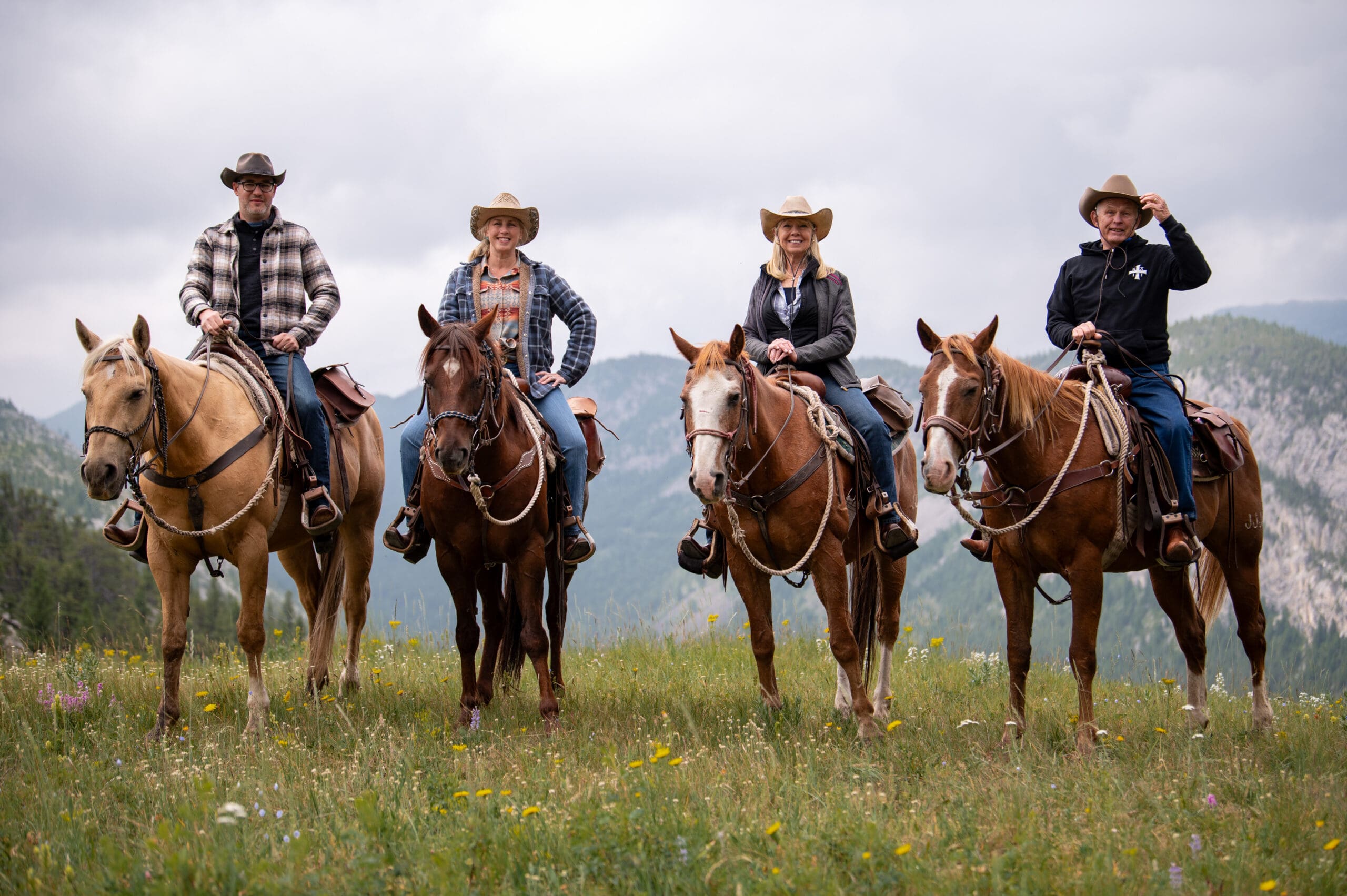
A horseback ride at Triple J Ranch is more than time in the saddle—it’s a chance to connect with a good horse, explore wild country, and create memories that stay with you long after you’ve left the Rocky Mountain Front. To help you feel confident and to keep our horses happy and well‑mannered, we’ve put together some friendly guidance rooted in how horses think, behave, and communicate.
Understanding Your Horse
Horses Are Partners, Not Machines
Riding is an active sport. Just like skiing or tennis, it requires awareness and participation. Your horse has a mind of his own, and he’ll use it—so stay engaged, guide him clearly, and be ready to respond to the world around you.
Herd Animals at Heart
Horses are deeply social. Being separated from the group can make them anxious, which may show up as whinnying, prancing, or rushing to catch up. Staying with the group helps everyone—horse and rider—feel secure.
A Clear Pecking Order
Horses have a natural hierarchy. A dominant horse may nip or kick if a lower‑ranking horse gets too close. Keeping space between horses prevents these little disagreements from becoming your problem.
Instincts First, Questions Later
A horse’s first response to something surprising is to flee. Sudden movement, an unfamiliar sound, or even a hat blowing off can cause a jump or shy. If a horse can’t flee, he may defend himself with a kick or bite—flattened ears and a switching tail are your early warning signs.
Creatures of Habit
Horses thrive on consistency. They’re trained to respond to specific cues, so unfamiliar signals can confuse them. Clear, steady communication helps your horse understand what you’re asking.
Common Trail Situations to Avoid
These examples help illustrate how horse instincts play out on the trail:
- Holding your horse back to create space for a canter can trigger anxiety and rushing.
- Riding too close to the horse in front invites kicking or nipping.
- Losing a hat or loose gear can spook horses behind you.
- Reaching for a coat or camera while moving can cause dropped reins, sudden movements, or accidental cues.
- Leaning for a photo while your horse navigates trees can unbalance you.
- Stopping alone at the back of the line to adjust clothing can leave you separated from the group—and walking home.
Understanding these instincts helps you ride safely and confidently.
Trail Riding Guidelines for a Safe, Enjoyable Ride
These practices keep you, your fellow riders, and our horses safe on the trail.
Before You Mount
- Wait for a wrangler to call your name and bring your horse to you.
- Stay by the haystack or arena—never among tied horses.
- Always approach your horse from the front and speak to him so he knows you’re there.
- Ask questions before leaving the barn if you’re unsure about reining or control.
On the Trail
- Maintain one horse length between you and the horse ahead; more at faster gaits.
- Keep up with the group—don’t hold back to run and catch up.
- Never pass the wrangler or another rider.
- If something feels off with your horse or saddle, ask for help.
- Stop the group (with the wrangler’s help) before taking photos.
- If someone is dismounted, the entire group waits.
- Don’t let your horse graze; it becomes a hard habit to break.
- Never use another rider’s leg—or horse—as a scratching post.
- No smoking near the barn or on the trail.
- At the halfway break, you can stretch, take photos, remove layers, or smoke (if conditions allow).
Mounting and Dismounting
- Let wranglers bring your horse to you and tie him when you return.
- Reins are not for tying—our wranglers use quick‑release knots for safety.
Gear & Equipment
- Keep reins untangled, cinch tight, and stirrups properly adjusted.
- Ask a wrangler to check anything that doesn’t feel right.
- Avoid rough handling—jerking reins or kicking creates confusion, not cooperation.
Practicing Good Horsemanship
A few simple habits make you a better rider and help your horse do his job well:
- Hold your reins securely and correctly.
- Keep weight on the balls of your feet with heels down.
- Keep your feet forward, especially during sudden stops.
- Lean forward going uphill and back going downhill.
- Stay alert and aware of your surroundings.
ABOUT THE PACE OF THE RIDE
Most of our mountain trails are best enjoyed at a relaxed walk. Terrain, weather, and rider ability determine the pace. Some trails simply aren’t safe for trotting or cantering, especially when steep or slippery. Controlled cantering rides can be arranged – must pass a loping test. You’re always welcome to spend extra time in the arena for additional instruction.